





Index
Introduction
It looks easy online. Just connect a few wires, right? Wrong. In modern vehicles, installing a remote starter isn’t a mechanical task—it’s high-stakes computer programming. One wrong connection can ground out your Body Control Module (BCM), turning your car into a parked brick.
We aren’t just installers; we are digital integrators. We take the risk off your shoulders. At Pro Car Sound & Security, we handle the complex data integration so you get the convenience without the anxiety.
The “YouTube myth”: why it’s harder than it looks
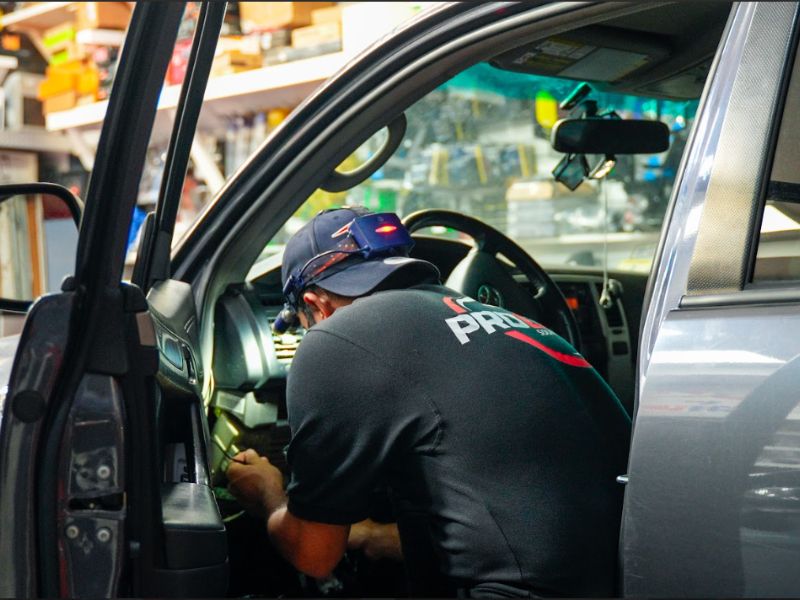
Professional remote car starter installation involves precise electrical work, specialized tools, and a strong understanding of how different vehicle systems operate. It demands technical skill and experience to ensure the remote start system connects seamlessly with your car’s existing electronics without causing damage or security issues.
Key steps in the professional installation process
When you bring your vehicle to Pro Car Sound & Security, our technicians follow a structured process to install your remote start kit correctly.
Step 1: Firmware Flashing: Before we touch a single wire, we connect the remote start module to our computer servers to download the specific firmware for your car’s VIN. A DIY kit bought online usually comes blank, meaning it simply won’t work out of the box.
Next, technicians carefully connect the remote starter unit to the ignition, power, and accessory circuits. They also integrate it with safety features like hood pins and brake switches to prevent unintentional starts. Programming the remote start system follows, where factory security systems and custom settings are synchronized.
Before returning the car to you, we test every function — from lock/unlock to engine start and range performance — to confirm that everything works safely and reliably. This method prevents the wiring mistakes that can lead to short circuits, error codes, or battery drain.
The tools you don’t have (but absolutely need)
Installing a remote car starter requires solid electrical and diagnostic skills. Technicians must read factory wiring diagrams, identify signal wires, and understand immobilizer and data bus systems. These skills help prevent interference with security or engine control units.
To do this safely, you need more than a test light. We use computer-safe logic probes (so we don’t fry your airbags) and digital oscilloscopes to read data streams. Using a cheap test light on a yellow airbag wire can deploy it in your face. Literally.
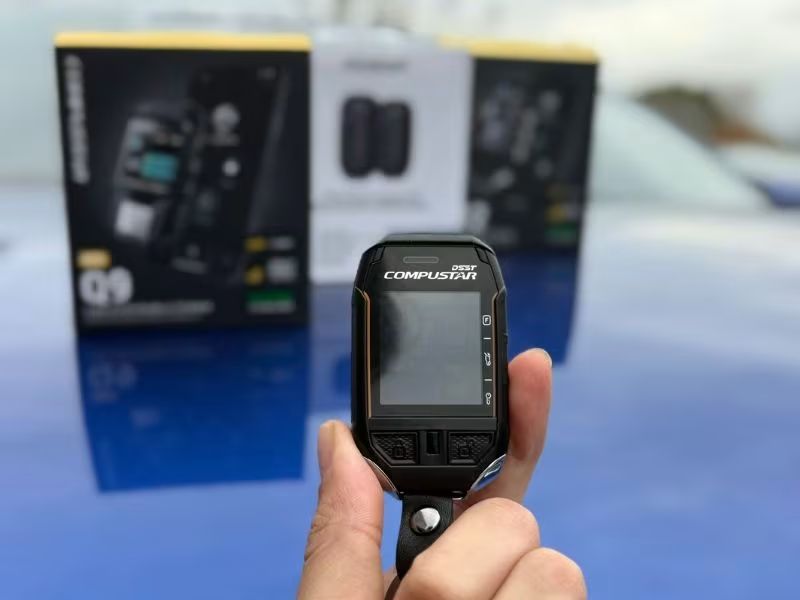
At Pro Car Sound & Security, you benefit from trained experts who use proper tools and follow tested procedures, ensuring your system — whether a NuStart 1 Way, NuStart 2 Way, Drone X2, or Compustar 2WG15, Q9, or T12 — performs exactly as designed.
Differences between vehicle types and systems
The difficulty of installation often depends on your vehicle type and the chosen remote start system. A basic compact car may require a simpler setup, while luxury or push-to-start vehicles use advanced data systems that need special interface modules.
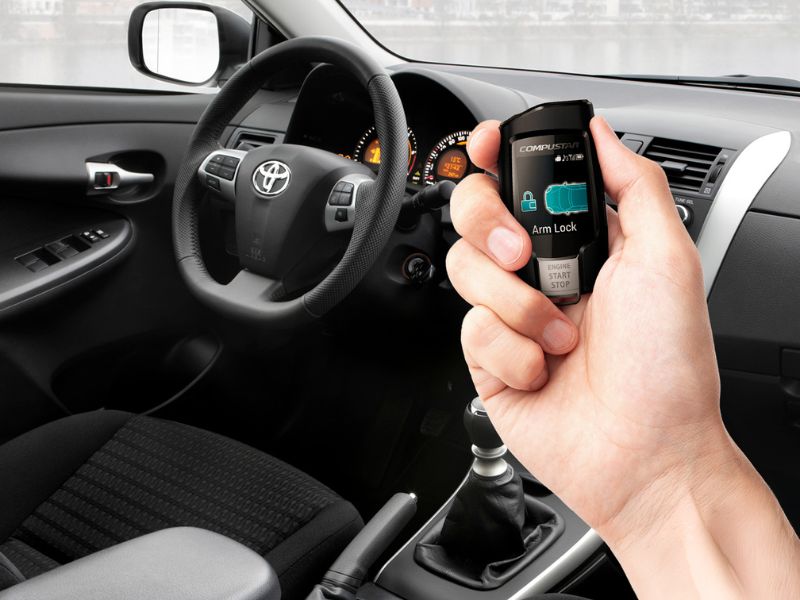
Think your car is simple? Even a “basic” Toyota Corolla now uses encrypted data signals to talk to the ignition. If you cut the wrong wire, the car thinks it’s being stolen and shuts down the fuel pump permanently until reset by a dealer.
Certain models require temporary disabling of factory alarms during installation, as well as detailed programming to match your car’s computer codes. Because the process varies widely between makes and models, working with professionals ensures that your installation meets safety standards and performs reliably in all conditions.
Components and considerations for professional installation
Installing a remote car starter involves more than connecting wires. It requires knowledge of your vehicle’s electronics, integration with factory systems, and use of specialized tools to ensure reliable and safe operation.
The immobilizer: your car’s digital guard dog
Modern vehicles often include factory anti-theft systems, immobilizers, and keyless entry systems, which must communicate properly with the remote starter. If these systems are not configured correctly, your vehicle may fail to start or trigger the security alarm.
A professional installer diagnoses your control module and checks compatibility with your vehicle’s security features. They use wiring diagrams to locate the correct ignition, starter, and accessory wires. Mistakes in these connections can lead to starting issues or even electrical faults.
At Pro Car Sound & Security, we use equipment like a digital multimeter, wire strippers, and soldering iron to confirm accurate connections and signal flow. Our approach guarantees that factory security remains intact while enabling convenient start-up through systems such as NUSTART 1 WAY or COMPUSTAR Q9.
The bypass module
This is the heart of the system. It’s a small computer that we must train to “mimic” your physical key. If this training fails (which happens often with cheap kits), your car loses its ability to recognize any key, leaving you stranded.
The bypass must match your car’s make, model, and year. Professionals test the integration and confirm that signals from systems like the brake switch or tachometer wire work together correctly. A wrong module or poor configuration may cause intermittent starts or disable the keyless entry.
When we install remote starters such as DRONE X2 or COMPUSTAR T12, we verify module software updates and immobilizer compatibility. This step allows your system to start securely without compromising built-in theft protection.
Wiring, safety, and avoiding common mistakes
Wiring accuracy determines how hard it is to install a remote car starter professionally. Installers must connect various circuits, including the parking lights, ignition wire, starter wire, and car battery. Incorrect wiring can cause short circuits or damage the electrical system.
The “Vampire Clip” Danger: DIY kits often include plastic “T-taps” or “vampire clips” to splice wires. We never use these. They sever copper strands and loosen with vibration, causing electrical fires or system failures months down the road. We solder everything.
At our shop, trained technicians check every wire and connection point before finalizing the installation. We also confirm that safety inputs such as the brake switch and tachometer wire respond correctly. Following these steps ensures that each system, from NUSTART 2 WAY to COMPUSTAR 2WG15, performs reliably while maintaining factory safety standards.
Is saving $150 worth risking your car’s computer?

The verdict is simple: Remote start installation is one of the hardest upgrades to DIY correctly. The money you “save” on installation is often spent on tow trucks and diagnostic fees later.
Don’t gamble with your car’s wiring. Call Pro Car Sound & Security today or visit our shop in Malden. We’ll get it done right, the first time, backed by a lifetime warranty.